

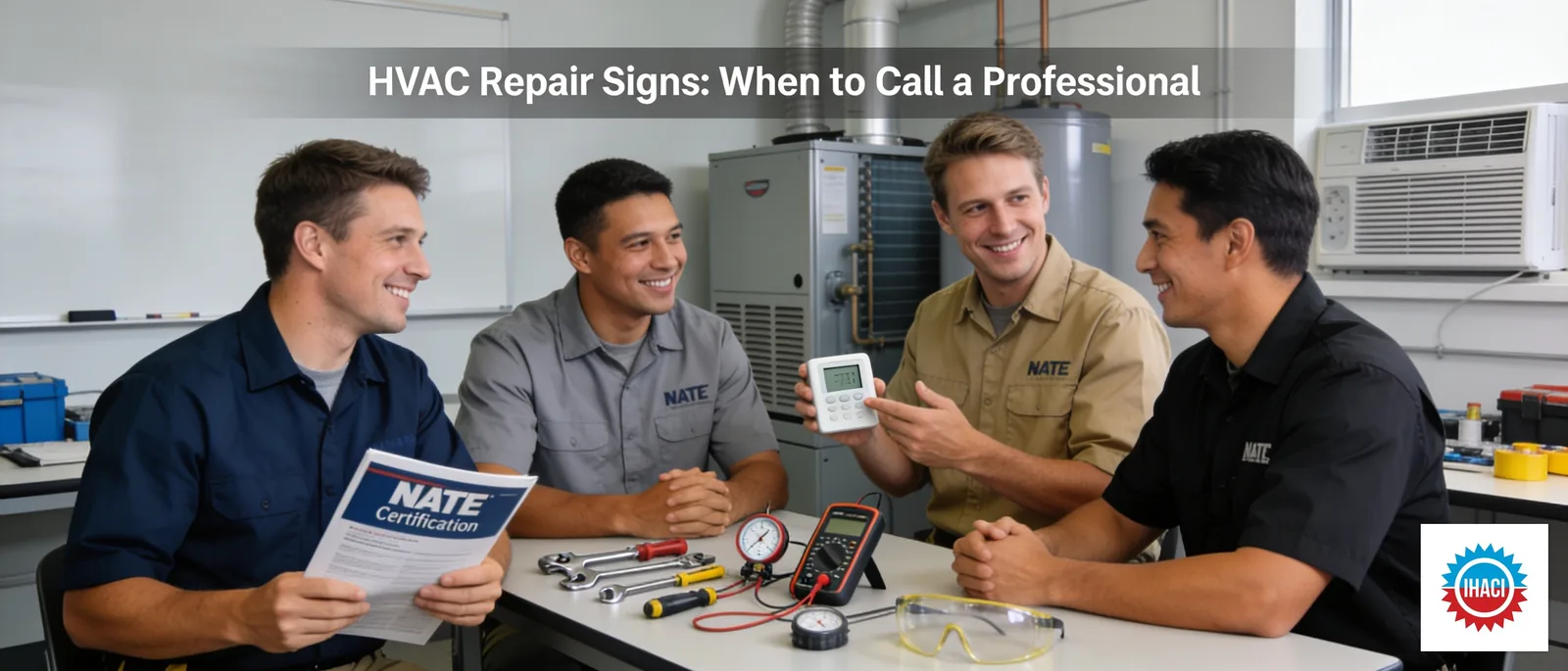
HVAC Repair Signs: When to Call a Professional
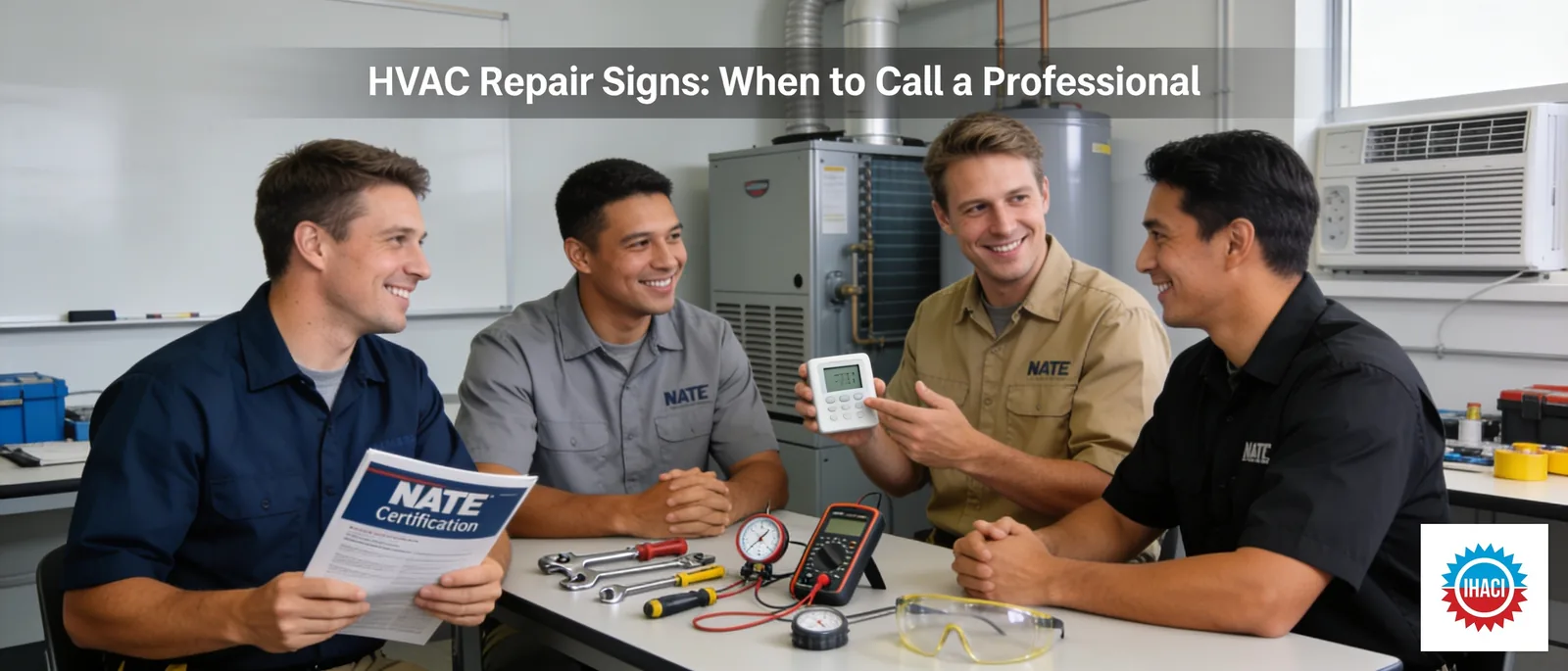
When homeowners notice hvac repair signs, we recommend calling in a professional for complex issues such as refrigerant leaks, electrical faults, and complete system failures — problems that go beyond basic thermostat checks or filter replacements. At the Institute of Heating and Air Conditioning Industries, Inc. in Glendale, CA, we support proper training for the technicians who handle these advanced repairs safely, and we see firsthand how often a timely call prevents a small fault from becoming a major breakdown. Calling in a professional becomes necessary once basic troubleshooting — checking the thermostat, filters, or circuit breaker — fails to resolve the issue, because refrigerant handling, electrical faults, and system installations all require certified technicians. We train those professionals in Glendale, CA, ensuring every graduate meets rigorous industry standards before entering the field.
Key Takeaways
HVAC systems require regular maintenance to prevent problems before they start. Skipping that maintenance is one of the fastest ways to invite costly repairs down the road.
Professional technicians handle complex issues that DIY repairs cannot safely address for homeowners. This is especially true for anything involving refrigerant, electrical components, or full system installation.
Old or outdated air conditioning systems need a professional evaluation to confirm they are still functioning safely and efficiently. Age alone can hide problems that are not yet obvious to the homeowner.
We are the Institute of Heating and Air Conditioning Industries, Inc. in Glendale, CA, and we provide expert HVAC guidance. We also train the technicians who put that guidance into practice every day.
Why Does Knowing When to Call Matter?
Recognizing hvac repair signs early is the difference between a minor service visit and a full system replacement. HVAC systems are complex assemblies — heating, ventilation, and air conditioning components all working in coordination — and mishandling any one of them causes cascading failures throughout the entire unit. Setting up or repairing an HVAC system without proper training creates real hazards, not just for the technician but for everyone living or working in the building. We have dedicated our work at the Institute of Heating and Air Conditioning Industries, Inc. to professional hvac service education for decades, precisely because the stakes of getting this wrong are too high to ignore.
What happens if you delay calling a professional?
Delayed repairs allow small faults to escalate into full system failures. A refrigerant leak left unaddressed, for example, forces the compressor to overwork, which shortens its lifespan significantly. The longer a compromised system runs, the more components it damages along the way, and what starts as a single repair can turn into a full replacement.
When does an HVAC issue become an emergency hvac situation?
Some warning signs demand immediate professional attention rather than a scheduled appointment. We ask homeowners to treat the following as emergency hvac territory:
Complete loss of heating or cooling during extreme weather counts as an emergency. It puts the safety and comfort of everyone in the home at risk.
Unusual burning smells or visible smoke near the unit should never be ignored. They often signal an electrical fault that can escalate quickly.
Electrical issues such as tripped breakers that reset and trip again point to a deeper wiring or component problem. Repeated tripping is not something to work around.
Strange loud noises — banging, screeching, or grinding — that appear suddenly usually mean a part has failed or come loose. Running the system further can cause more damage.
We train technicians to assess exactly these scenarios with precision and safety. Knowing when to call a professional is not just practical knowledge — it is a matter of safety for every occupant in the building.
What Simple Checks Can Homeowners Do First?
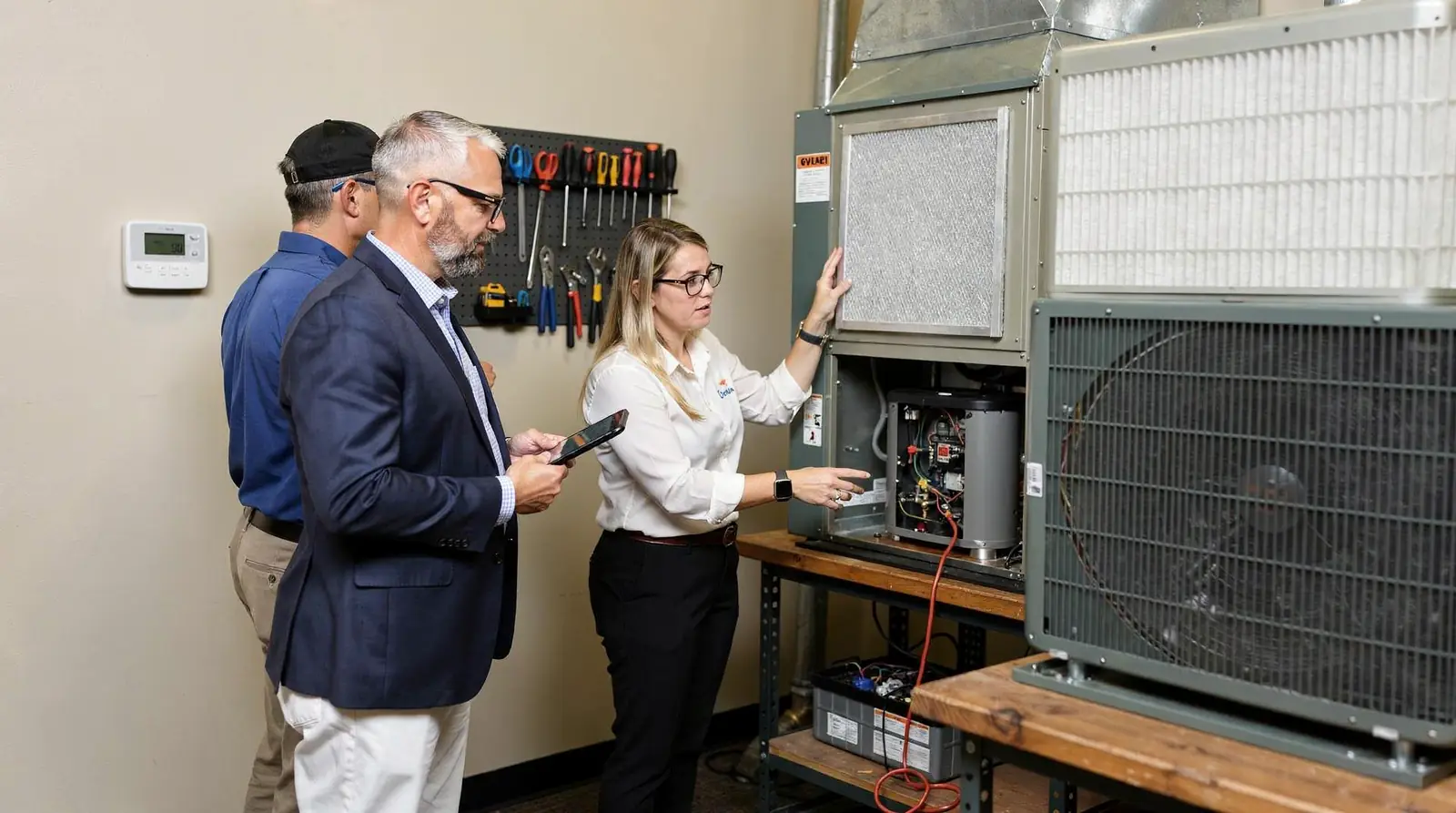
Before contacting a technician, homeowners can resolve many minor HVAC issues by running through a short checklist of basic diagnostics. Recognizing the difference between a simple fix and a genuine hvac repair sign saves time and avoids unnecessary service calls. Three straightforward checks address the most common causes of underperforming systems:
Thermostat settings: Confirm the unit is set to "cool" and that the target temperature is lower than the current room temperature. A misaligned setting is one of the most overlooked causes of poor performance, and correcting it takes only a moment.
Air filter condition: A clogged filter restricts airflow and forces the system to work harder than it should. Verify the filter has been replaced recently, since a dirty filter alone accounts for a surprising number of the service calls we see.
Outdoor compressor clearance: Check that no debris, overgrown vegetation, or accumulated dirt is blocking airflow around the outdoor compressor unit. Restricted airflow at the compressor reduces system efficiency significantly and can shorten the unit's lifespan over time.
Why Does the Thermostat Matter So Much?
The thermostat is the command center of any HVAC system. An incorrect mode setting or a temperature calibration issue prevents the system from cycling on at all, making it appear far more broken than it actually is, and correcting the setting takes seconds and costs nothing.
When Is a DIY Check Enough?
Simpler issues — a tripped setting, a clogged filter, blocked airflow — fall within the homeowner's ability to address safely. Complex mechanical failures, refrigerant concerns, or electrical faults are a different matter entirely. We consistently emphasize at the Institute of Heating and Air Conditioning Industries, Inc. that knowing where the boundary lies between a basic fix and a situation requiring professional hvac service is itself a form of HVAC literacy, and attempting repairs beyond that boundary risks equipment damage and personal safety.
What Are the Key HVAC Repair Signs to Watch?
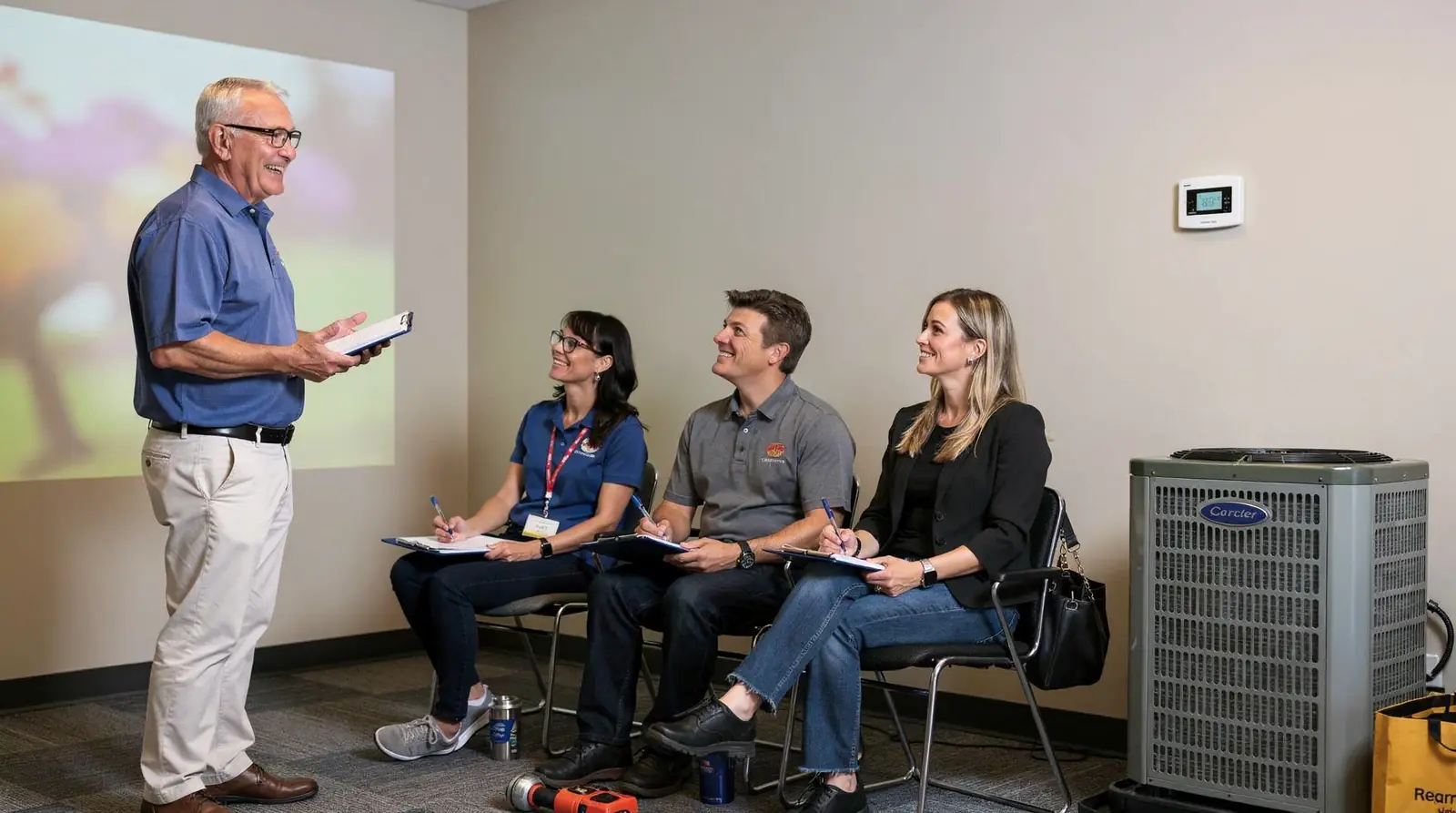
HVAC repair signs range from uneven temperatures to unusual sounds, and recognizing them early prevents minor issues from becoming costly system failures. HVAC systems work silently year-round to regulate temperatures and maintain indoor air quality, which means problems often develop gradually before homeowners notice anything wrong. Even with regular maintenance, AC and heating systems encounter issues over time, so knowing which warning signals demand immediate attention, and which allow a brief window for assessment, is the first step toward protecting your home's comfort.
What Are the Most Common Warning Signs Your HVAC Needs Attention?
We ask homeowners to watch for these indicators that a system requires a professional evaluation:
Uneven or inconsistent temperatures across rooms are one of the most frustrating and recognizable signs of a struggling system. They often point to duct or airflow problems rather than the thermostat itself.
Unusual noises such as banging, rattling, or grinding during operation usually mean a part is worn, loose, or failing. They rarely resolve on their own.
Weak or restricted airflow from vents can point to a failing blower motor or a blocked duct. It often gets worse the longer it goes unaddressed.
Unexplained increases in energy bills without a change in usage habits typically mean the system is working harder than it should. That is a sign efficiency has dropped.
Persistent odors, including musty or burning smells, when the system runs can indicate mold growth or an electrical issue. Either one deserves prompt attention.
Frequent cycling — the unit turning on and off more often than normal — puts extra strain on major components. Over time, it shortens the system's overall lifespan.
Visible moisture or leaks around the indoor or outdoor unit often signal a refrigerant or condensation problem. Either one calls for a closer look from a trained technician.
Any single item on this list warrants a closer look, and multiple signs appearing together signal that professional HVAC service is needed without delay.
When Does an HVAC Problem Become an Emergency?
Not every malfunction qualifies as an emergency HVAC situation, but some do. Complete loss of heating during extreme cold, the smell of burning electrical components, and refrigerant leaks all require an immediate professional response, because these conditions affect both safety and system integrity and waiting only compounds the damage. We train technicians at the Institute of Heating and Air Conditioning Industries, Inc. to diagnose and resolve the full spectrum of HVAC issues, from routine repairs to urgent failures, and certification confirms that a technician has completed essential training and that their skills meet established industry standards. Trusting a certified professional means the diagnosis is accurate and the repair is done right the first time.
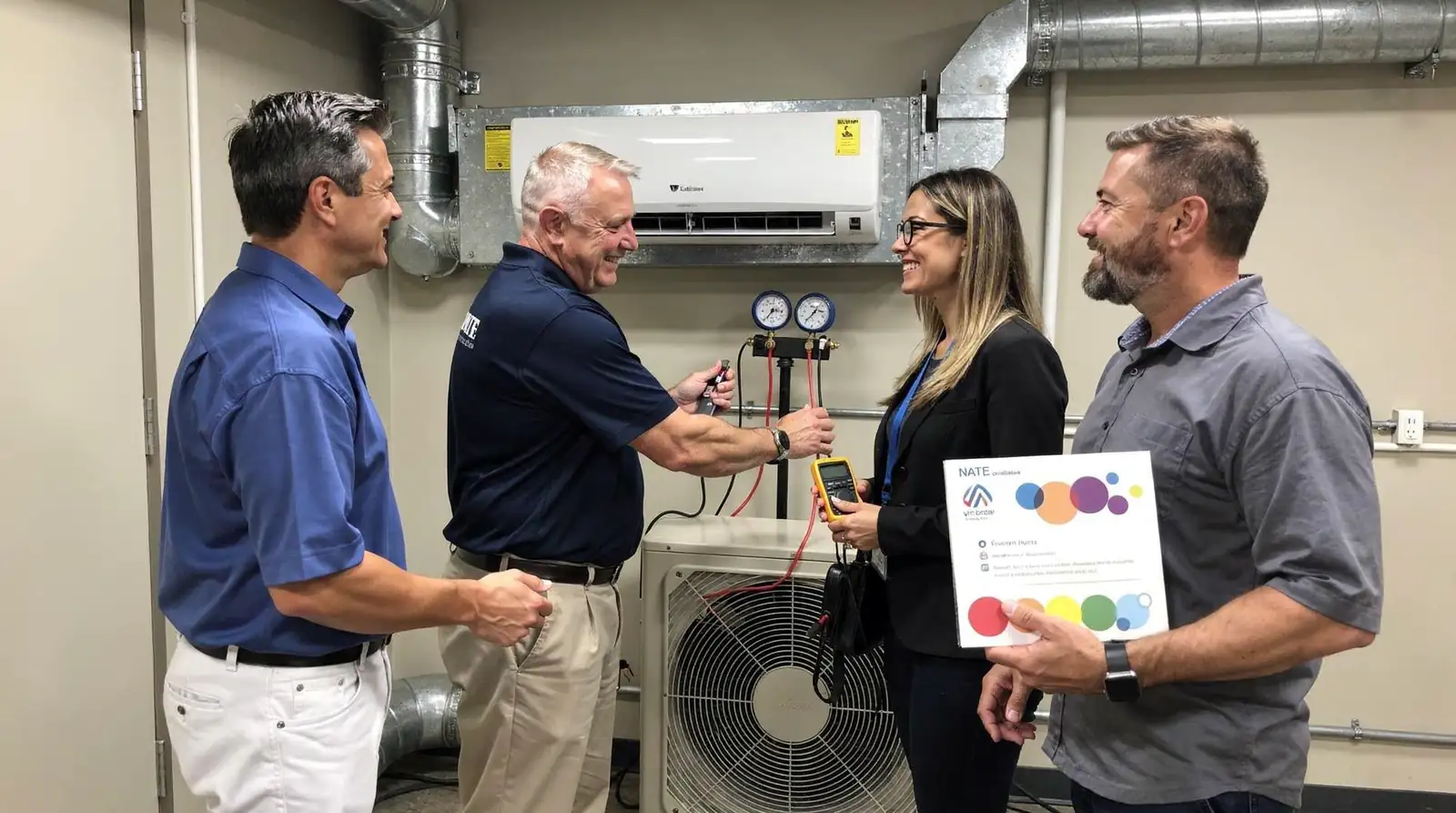
When Does a Problem Require Professional HVAC Service?
Professional HVAC service becomes necessary the moment a malfunction moves beyond basic thermostat checks and filter swaps. Even the most experienced do-it-yourselfers will eventually encounter HVAC problems that demand formal training, specialized tools, and hands-on expertise to resolve safely. We strongly recommend calling a certified technician rather than attempting DIY repairs on a malfunctioning unit, because the risks of an incorrect repair — extended system downtime, voided warranties, and potential safety hazards — far outweigh the short-term savings of handling the problem alone.
What Are the Most Common HVAC Repair Signs That Need a Pro?
Recognizing hvac repair signs early prevents minor issues from becoming costly failures. We ask homeowners to watch for these indicators:
Unusual noises such as grinding, banging, or squealing from the unit usually mean a mechanical part has failed or is about to. Continued operation can make the repair more extensive.
Inconsistent temperatures, where rooms stay too hot or too cold despite correct thermostat settings, often point to duct, airflow, or equipment sizing issues. These issues need a trained eye to diagnose correctly.
Unexplained spikes in utility bills suggest the system is working harder than it should. This is a common sign that efficiency has dropped and a component needs attention.
Refrigerant or moisture leaks around the indoor or outdoor unit can affect both performance and safety. They should be assessed as soon as they are noticed.
Frequent cycling, where the system turns on and off in rapid succession, puts unnecessary wear on the compressor. Other major components take on extra strain as well over time.
Any one of these conditions signals that the system requires a trained technician's assessment, not a trial-and-error fix.
When Does an HVAC Problem Become an Emergency HVAC Situation?
An emergency HVAC situation exists when a malfunction creates an immediate health or safety risk. Complete loss of heating during extreme cold, suspected refrigerant leaks, or electrical burning smells all require urgent professional attention, and delaying service in these scenarios puts occupants at serious risk. HVAC professionals are trained to work with advanced equipment that requires particular skills, skills acquired through structured, formal training programs rather than online tutorials. Our training programs at the Institute of Heating and Air Conditioning Industries, Inc. are designed to build exactly that level of competency, producing technicians who are more valuable to employers and clients alike, and trusting a properly credentialed professional protects both the system and the people who depend on it.
What Constitutes an Emergency HVAC Situation?
Emergency HVAC situations are conditions that threaten occupant safety or comfort so severely that delaying professional service causes measurable harm. Recognizing hvac repair signs that cross from routine inconvenience into genuine emergency is the first step toward protecting everyone inside the building. Not every HVAC malfunction demands an urgent call, but certain failures escalate quickly — on especially blistering days, a functioning air conditioning system shifts from a convenience to a critical health safeguard, and a breakdown under those conditions is not something to defer. Similarly, any situation involving exposed components, unusual odors, or suspected electrical faults moves immediately into emergency territory.
Which HVAC Problems Require Immediate Professional Attention?
Some failures cannot wait for a scheduled appointment. We consider the following conditions to warrant same-day professional hvac service:
Complete loss of cooling or heating during extreme weather conditions puts the household at real risk. It should be treated as a same-day priority.
Unusual burning smells or electrical odors coming from any unit component often point to an overheating part. Running the system further increases the danger.
Visible ice buildup on refrigerant lines or the indoor coil usually signals a refrigerant or airflow problem. Left alone, it can damage the compressor.
Loud banging, grinding, or screeching sounds that begin suddenly almost always mean a component has failed or come loose. The noise typically gets worse over time.
Suspected refrigerant leaks pose both health and environmental risks. They should be inspected and repaired by a certified technician right away.
Calling a professional promptly when these signs appear keeps a home more comfortable and keeps occupants safe, and those two outcomes go hand in hand.
Why Is DIY Repair Dangerous in an Emergency?
Attempting self-repair during an HVAC emergency introduces serious risk. Setting up or servicing an HVAC system is difficult work, and improper handling is hazardous to both the person performing it and the residents of the property. Trained technicians carry the knowledge and tools to isolate hazards before they escalate, which is exactly why we train technicians at the Institute of Heating and Air Conditioning Industries, Inc. to handle high-stakes situations with precision and professionalism. Recognizing the boundary between a manageable issue and a true emergency is a skill, and acting on that recognition quickly is what separates a safe outcome from a dangerous one.
Why Does HVAC Certification Matter When Hiring?
HVAC certification confirms that a technician holds verified expertise in specific parts of a heating and cooling system. Certification goes beyond a standard license — professional hvac service providers carry both credentials, and the distinction matters when a system fails. We train technicians at the Institute of Heating and Air Conditioning Industries, Inc. to meet the standards that certification demands, because a license permits a technician to work legally while certification proves mastery. Those are two different things, and homeowners who overlook that difference risk hiring someone underqualified for the job at hand.
What Does HVAC Certification Actually Confirm?
Certification demonstrates that a technician has passed rigorous evaluation in one or more subject areas relevant to HVAC systems. Some certifications require passing a combination of subjects, while others focus on a single specialized topic, but either way, the credential signals a measurable knowledge level — not just on-the-job experience, but verified, tested competence.
How Many Types of HVAC Certification Exist?
Trading and professional societies offer many types of HVAC certificates, each covering different areas of the trade. This variety exists because HVAC systems are complex, and a technician certified in one discipline brings targeted expertise that a generalist license alone does not guarantee. When evaluating a service provider, we recommend looking for these credential markers:
A valid HVAC license is the legal baseline for operating in your state. It confirms the technician meets the minimum standard required to do the work at all.
Certification from a recognized professional or trade society is proof of subject-matter expertise. It usually means the technician has been tested on specific skills rather than just gaining experience on the job.
Certification scope matters too, since some credentials cover a single topic while others combine several disciplines. Knowing the difference helps you match the technician to the job.
Recognizing the hvac repair signs that demand a certified technician — unusual noises, refrigerant issues, persistent inefficiency — protects your system and your investment. In an emergency hvac situation, a certified technician resolves the problem faster and more safely than an uncredentialed one, and we built our curriculum around exactly that standard.
How Does Ongoing Training Keep HVAC Professionals Current?
Ongoing training keeps HVAC professionals current by ensuring mastery of new technologies, evolving regulations, and industry best practices. The HVAC field changes constantly, and technicians who fall behind on those changes risk misdiagnosing systems, violating code, and losing client trust. We build our curriculum at the Institute of Heating and Air Conditioning Industries, Inc. around the realities of that change, and because our courses are developed by industry experts, every lesson is relevant, practical, and immediately applicable on the job. There is no filler content — every hour of instruction connects directly to what technicians encounter in the field.
Why Do HVAC Technicians Need Regular Code and Regulation Updates?
California's energy efficiency requirements, refrigerant guidelines, and building codes are updated on a rolling basis. We educate professionals on the latest versions of those standards so that every installation and repair meets current compliance requirements, because a technician working from outdated knowledge does not just risk a failed inspection — that technician exposes clients and property owners to real liability.
What Are the Core Benefits of Industry-Specific HVAC Training?
Structured, expert-led training delivers advantages that self-study rarely matches. The key benefits our programs address include:
Recognizing hvac repair signs early, before minor faults escalate into system failures. This saves homeowners both time and unnecessary repair work.
Applying professional hvac service standards that satisfy both client expectations and regulatory requirements. Every job holds up to scrutiny as a result.
Responding effectively to emergency hvac situations where diagnostic speed directly affects safety. Quick, accurate judgment can prevent a bad situation from getting worse.
Staying current on refrigerant transitions and California-specific energy mandates. This keeps every technician's work compliant as the rules evolve.
Advancing career standing by demonstrating verified, up-to-date competency. This sets a technician apart in a field that rewards proven skill.
Professionals who invest in continuing education with us gain a measurable edge. The industry does not stand still, and neither do we — our training programs are designed to move with the field, keeping every technician we train ready for whatever the next job demands.
How Can the Institute of Heating and Air Conditioning Industries, Inc. Help You Find Qualified Technicians?
We have long served the HVAC/R/SM industries, building a deep network of trained, credentialed professionals in and around Glendale, CA. Our HVAC School plays a vital role in ensuring technicians remain informed, competitive, and ready to handle everything from routine maintenance to emergency hvac situations.
When hvac repair signs appear — unusual noises, inconsistent temperatures, or spiking utility bills — the difference between a fast fix and a prolonged breakdown often comes down to technician quality. Poorly trained technicians miss root causes, and that delays repairs, extends discomfort, and drives up service costs. Connecting with one of our trained professionals reduces that risk significantly.
What Types of Training Do Our Technicians Complete?
We prepare technicians through three distinct pathways: certificate programs, associate degree programs, and apprenticeship programs. Each pathway follows graduation from high school or the equivalent, and this structured approach ensures that every technician entering the field has met a defined standard of hands-on and theoretical competency.
Certificate programs offer focused, skills-based training for faster entry into the field. They concentrate on the practical skills technicians use every day.
Associate degree programs pair a broader academic foundation with technical instruction. Graduates come away with a wider base of knowledge to build on.
Apprenticeship programs combine supervised, on-the-job learning with classroom study. Technicians gain real-world experience alongside formal training this way.
Why Does Choosing One of Our Technicians Matter for Professional HVAC Service?
Professional hvac service demands more than basic mechanical knowledge. Regulations, refrigerant standards, and system technologies evolve continuously, and our curriculum is designed by industry experts to keep technicians current on codes, compliance requirements, and emerging best practices. A technician trained through our programs in Glendale, CA brings verified, up-to-date expertise, not guesswork, to every service call.
Ready to Work With a Certified HVAC Professional?
Recognizing when to call a professional protects your system's longevity, keeps your home comfortable, and safeguards your family's well-being. Prompt professional intervention prevents minor issues from escalating into costly repairs, and by prioritizing regular maintenance and addressing concerns promptly, you invest in reliable performance and peace of mind. We remain committed at the Institute of Heating and Air Conditioning Industries, Inc. to advancing industry standards and supporting the skilled professionals who deliver these essential services to homeowners in Glendale, CA. Reach out to us to connect with a technician trained through our programs.
FAQ
When do I need to call an HVAC professional instead of fixing the issue myself?
We recommend calling a professional when basic checks — thermostat settings, filters, and the circuit breaker — fail to resolve the problem, or when the issue involves refrigerant handling, electrical faults, or system installation.
What are the warning signs that my HVAC situation is an emergency?
Burning smells, visible smoke, repeatedly tripping breakers, sudden loud banging or grinding noises, and complete loss of heating or cooling during extreme weather all require immediate professional attention.
What happens if I delay calling a professional for an HVAC repair?
Small faults escalate into full system failures. An unaddressed refrigerant leak forces the compressor to overwork, shortening its lifespan and damaging additional components the longer the compromised system runs.
Subscribe to newsletter
Register for your FREE printed or digital subscription of ICN
Payments


